Land Clearing FAQ Chino Hills Property Owners Ask Every Spring
The land clearing FAQ Chino Hills owners actually need: deadlines, penalties, clearance distances and real cost factors.
What exactly does the fire district want cleared, and by when? That single question drives most of the land clearing calls made in the Chino Valley between February and June, and the answer changes depending on which side of a county line your parcel sits on.
This land clearing FAQ Chino Hills owners can work straight through holds20 answers: abatement deadlines and penalties, defensible space distances, the overlay district rules, equipment and timing limits, pricing factors, and how the rules change in Diamond Bar and Yorba Linda.
Dates and dollar amounts are set per program year. Always check the current season against your own notice or with your fire agency, such as the Chino Valley Fire District.
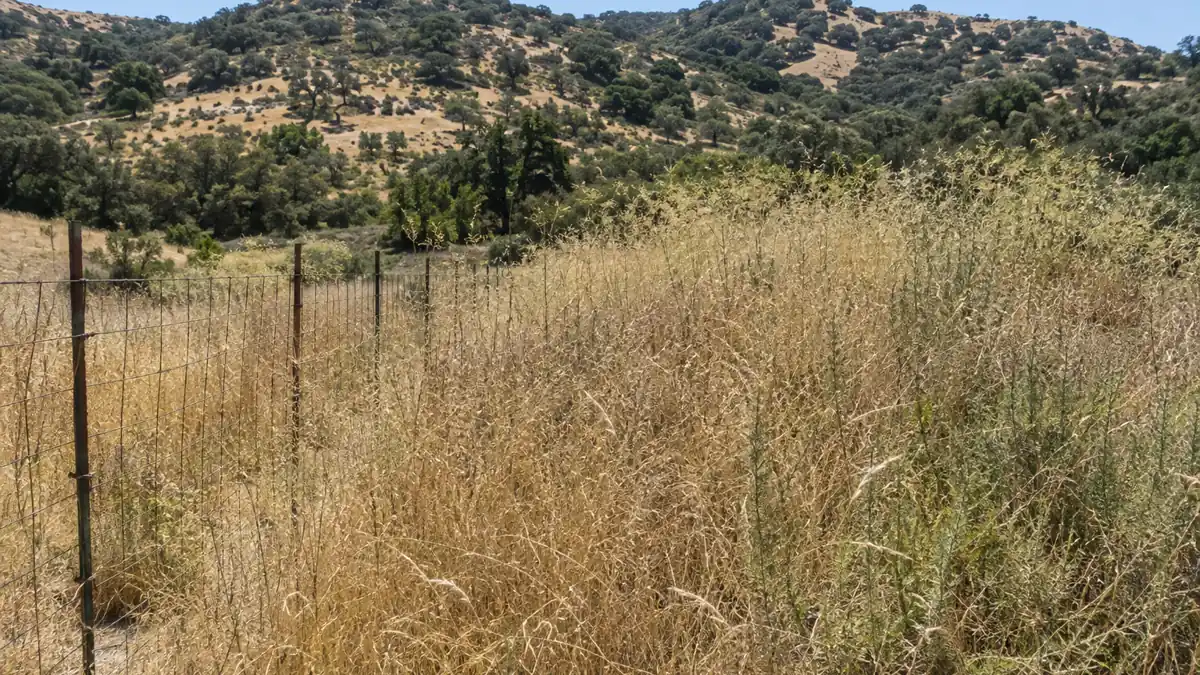
The land clearing FAQ Chino Hills owners start with: deadlines, notices and penalties
When does brush have to be cleared in Chino Hills?
The Chino Valley Fire District runs a mandatory annual weed abatement program covering Chino Hills, Chino and Carbon Canyon. Combustible vegetation must be cleared by May 5 each year.
Parcels are checked again at a June 11 reinspection. Dates are set per program year, so confirm the current season against your notice before you plan around them.
What happens if you miss the weed abatement deadline?
A parcel still found hazardous at the June 11 reinspection carries a $300 non-compliance penalty. That penalty applies whether or not you eventually do the work yourself.
If the district's contractor has to clear the parcel, the owner is billed the cost of that clearing on top of the penalty. Booking an abatement mow in March or April costs far less.
What is the $328 administration fee for?
It is the district's charge for administering a forced abatement — the paperwork, contractor coordination and billing that happen when an owner does not clear a parcel themselves.
It is added to the contractor's clearing cost, so the final bill is clearing cost plus a $328 administration fee. Verify the current-year amount on your notice.
I got a weed abatement notice in the mail. What does it require?
It tells you the parcel has been identified as a fire hazard and gives you a date to clear it by. The notice sets out what has to come down: dry grass, dead vegetation, and combustible growth around structures and along property lines.
Send us the address and the date on the notice and you get a written scope and price back. Start at the estimate request page.
Do the deadlines apply to vacant lots as well as houses?
Yes. Vacant and undeveloped parcels are a common source of abatement notices, because tall dry annual growth on an empty lot is exactly the fuel the program targets.
Vacant parcels are usually priced and worked differently from a home's defensible space, since the whole lot gets treated at once. That is lot and land clearing.
Defensible space and overlay district rules
How much defensible space does California require?
California's defensible space law, Public Resources Code 4291, requires 100 feet of defensible space around structures in designated hazard zones — or to the property line, whichever comes first.
It is a state standard, so it applies across the whole service area regardless of which fire agency inspects your parcel.
Is the whole 100 feet cleared the same way?
No. The zone closest to the structure is the strictest. Dead plants, dry grass, leaf litter and anything combustible stored against walls or under decks has to go.
Farther out, the work is thinning and spacing rather than removal. Grass gets cut down, brush gets broken up so fire cannot run through it in a continuous sheet, and dead material is pulled out.
Which Chino Hills neighborhoods have extra brush rules?
Chino Hills applies a Fire Hazard Overlay District covering Vellano, Ridgegate and the Carbon Canyon communities. Properties inside it carry extra defensible space requirements every season.
Requirements include removing dead palm fronds, mowing grass to four inches or less, clearing dead vegetation, keeping leaves and pine needles off roofs and out of gutters, and removing combustibles from under decks. The City of Chino Hills publishes the current maps.
Do roofs and gutters count as brush clearance?
Under the overlay district requirements, yes. Leaves and pine needles have to be cleared from roofs and gutters, because wind-blown embers land there first during a fire.
It is a small job compared with a hillside, but it is one of the most common items an inspector writes up on an otherwise well-cleared property.
Does clearing mean stripping the slope down to bare dirt?
No, and it should not. Removing all vegetation from a slope creates an erosion problem the first winter it rains, and it is not what the defensible space standard asks for.
Good slope work reduces and separates fuel while leaving root structure holding the hillside together. Dead material comes out, live plants get thinned and spaced.
Equipment, timing and wildlife restrictions
Why do crews start brush clearing work before 10 a.m.?
Fire district guidance is to run mowers and trimmers before 10 a.m. Fuel moisture is highest early, temperatures are lower, and winds are usually calmer, so a thrown spark has less to catch.
By afternoon in late spring, dry grass and heat combine into the exact conditions that turn a rock strike into a roadside fire.
Can you mow dry grass with a regular lawn mower?
You should not. Fire agency guidance is explicit: never mow dry vegetation with a lawn mower. A blade hitting a rock throws sparks straight into the fuel you are standing in.
Dry annual growth calls for string trimmers, brush cutters or a mowing deck rated for the job, run early in the day. Fire agencies warn about mower blades striking rock in dry grass for exactly this reason.
What happens to scheduled work on a red flag day?
It moves. Running steel through dry fuel during a Santa Ana wind event is not a risk worth taking, and agencies restrict equipment use in those conditions.
Booking early in the season is the practical answer, because red flag days cluster in exactly the stretch when everyone is trying to finish before their deadline.
Does nesting bird season affect brush clearing?
It can. Nesting bird season runs roughly February 1 through August 31, and state and federal bird protections apply to active nests.
Large clearing jobs in dense brush during that window may need a pre-clearing survey before machines go in. On a typical residential mow it rarely comes up; on heavy overgrowth removal or an untouched parcel, it can.
Pricing, timelines and scheduling
What does land clearing cost around Chino Hills?
There is no flat rate, and anyone quoting one over the phone is guessing. Price tracks parcel size, slope, machine access, vegetation density and how much green waste has to be hauled off.
As a rough guide for this region: small residential yards with light annual growth land at the low end, larger parcels with machine access sit in the middle, and steep hand-crew hillside work with full haul-off is the top of the range. You get a written number before work starts.
How long does a typical land clearing job take?
Most residential defensible space jobs are a single day. A standard yard with annual grass and moderate brush is usually a few hours, including cleanup and loading.
Acre-plus parcels, steep slopes and multi-season overgrowth run longer, and the estimate tells you the expected time before the crew arrives.
Do you haul the cut brush away?
Yes. Cut material left in a pile on the property is still fuel, and an inspector can still write it up. Green waste removal is part of the job rather than an extra charge added afterward.
Disposal is charged by weight, which is why tonnage shows up as a line in the estimate on heavy jobs.
How far ahead should you book land clearing work?
Earlier than feels necessary. Demand across the Chino Valley concentrates between February and June, and the last two weeks before a deadline are the hardest slots to get.
If you want an annual maintained fuel break rather than a one-time cut, that runs on its own cycle — see fuel modification maintenance.
Outside the Chino Valley Fire District
Are the rules the same in Diamond Bar and Yorba Linda?
No. Diamond Bar sits in Los Angeles County, where the Los Angeles County Fire Department runs its own annual brush clearance program with its own deadlines and inspections. Yorba Linda sits under the Orange County Fire Authority, which handles its own defensible space inspections on its own cycle.
Verify current-year dates with the agency that covers your address. See the Diamond Bar service area page or the Yorba Linda page for local detail.
Do you clear brush in Carbon Canyon?
Yes, and it is some of the most access-limited work in the valley. Carbon Canyon Road is narrow and steep, parcels drop away from the road, and large equipment often cannot turn around.
The canyon burned in 1990 and again in 2008, so clearance there is taken seriously by residents and inspectors alike. The Carbon Canyon page covers the terrain in detail.
This page covers the cases that come up most. Yours may not be one of them, so send the address through the estimate form for a straight answer with the price, or read the Chino Hills area page for the local deadline in detail.
Get your land clearing questions answered with a free estimate
Tell us where the property is and what needs clearing. You get a written estimate back, with no obligation to book the work.